




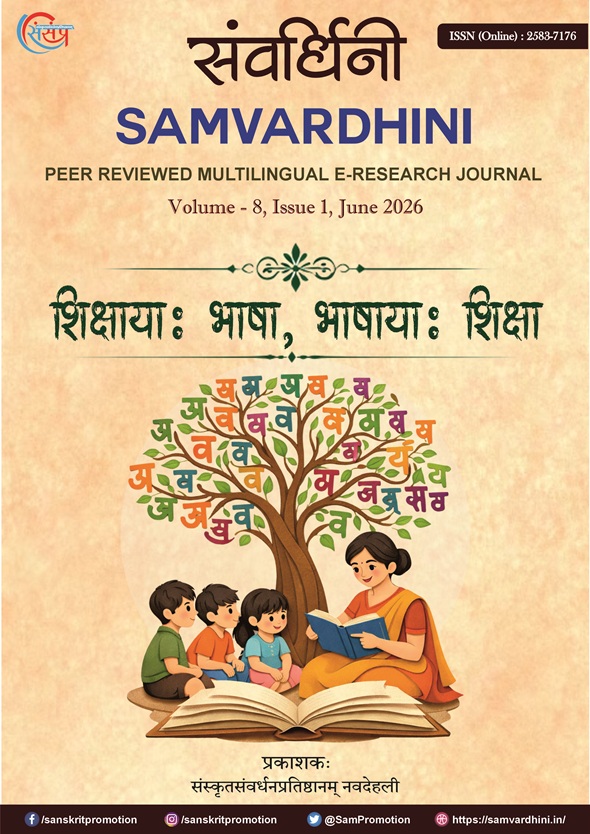
अनुक्रमणिका
Volume: 8 Issue- 1, June 2026
राष्ट्रियशिक्षानीतिः – 2020 इत्यालोके मातृभाषाशिक्षणं वैश्विकभाषाकौशलञ्च
शोधलेखोऽयं ‘राष्ट्रियशिक्षानीतिः – 2020’ इत्यत्र अन्तर्निहित-भाषासम्बन्धिप्रावधानानां व्यापकं विश्लेषणं प्रस्तौति। अध्ययनमिदं नीतेः मूलभूतां संकल्पनाम् अर्थात् शिक्षणमाध्यमत्वेन मातृभाषायाः स्थानीयभाषायाः वा महत्त्वं बहुभाषावादस्य पोषणार्थं त्रिभाषासूत्रस्य परिस्थितिसापेक्षक्रियान्वयनम् एवञ्च एकविंशतिशताब्द्याः कौशलैः सह भाषिक-क्षमतानां समन्वयं गहनतया समीक्षते। नीति-प्रलेखानां सम्बद्ध-शोधलेखानां शैक्षिक-सांख्यिकीयतथ्यानां तथा च ‘स्थित्यध्ययनानाम्’ इत्येतेषां विश्लेषणद्वारेण शोधोऽयं मातृभाषाधारित-बहुभाषि-शिक्षायाः संज्ञानात्मक-शैक्षणिक-सामाजिक-सांस्कृतिक-आर्थिक-लाभानां रेखाङ्कनं करोति। शोधोऽयं शिक्षक-शिक्षायां परिष्कारं डिजिटल-संसाधनानां विकासं तथा च शिक्षण-सामग्रीणाम् अनुवाद-सदृशीनां प्रमुखानां कार्यान्वयनस्य सन्दर्भे आह्वानानां परिचयं प्रददाति तन्निराकरणार्थम् एकस्य एकीकृत-तन्त्रस्य प्रस्तावं च करोति। निष्कर्षानुसारं राष्ट्रियशिक्षानीतिः 2020 इत्यस्याः दृष्टिकोणम् अनुपाल्यते तर्हि एषा समावेशेन सह न्यायसंगत-गुणवत्तापूर्ण-शिक्षायाः मार्गं प्रशस्तं करिष्यति । भारतम् अपि ‘वैश्विक-ज्ञान-महाशक्तिः’ इति रूपेण स्थापयितुं साहाय्यं करिष्यति । भाषावैविध्यम् काचित् अमूल्या सम्पत्तिः अस्ति न तु बाधा।
भारतीयचिन्तनपद्धतौ शास्त्रीयनृत्यस्य परिकल्पना
भारतीयललितकलास्वस्ति नृत्यकलायाः अतीव वैशिष्ट्यम् । क्रीडनीयकप्रकृतिविशिष्टस्य नाट्यस्य आनन्दजनकत्वं तु स्वतः सिद्धम् । भरतखण्डेऽस्मिन् नृत्यस्य नानाप्रकाराः देशभेदेन अवलोक्यन्ते । परन्तु सर्वेषामपि नृत्यप्रकाराणां मूलं भवति शास्त्रीयनृत्यम् यच्च नाट्यशास्त्रादिग्रन्थेषु विस्तृतरूपेण प्रतिपादितम् । तादृशस्य शास्त्रीयनृत्यस्य उगमः प्रवर्धनम् स्वरूपकथनञ्च विस्तरेणात्र लेखे प्रस्तुतम् ॥
वैदिक जीवन-दृष्टि एवं समकालीन वैश्विक चुनौतियााँ
इक्कीसवीं सदी विज्ञान तकनीक और वैश्वीकरण की तीव्र प्रगति की साक्षी है। आधुनिक आविष्कारों और डिजिटल क्रांति ने मानव जीवन को सुविधाजनक तो बनाया है किंतु इसके साथ ही अनेक गम्भीर वैश्विक संकट भी उत्पन्न हुए हैं। पर्यावरणीय असंतुलन जलवायु परिवर्तन प्राकृतिक संसाधनों का अत्यधिक दोहन नैतिक मूल्यों का ह्रास मानसिक तनाव उपभोक्तावाद सामाजिक विघटन तथा बढ़ती हिंसा आज मानव सभ्यता के समक्ष प्रमुख चुनौतियाँ हैं। यह स्थिति स्पष्ट करती है कि केवल भौतिक उन्नति मानव जीवन को संतुलित शांत और सार्थक नहीं बना सकती।
पिछले 5000 वर्षों में भारतीय लिपियों का विकास दक्षिण भारत के विशेष परिप्रेक्ष्य में
भाषा यदि ध्वनि है तो लिपि उस ध्वनि का चिह्न है । लिपि का अध्ययन किसी भी राष्ट्र की सामाजिक सांस्कृतिक पृष्ठभूमि को समझने में सहायक होता है । भारतीय उपमहाद्वीप में लिपियों का विकास लगभग पाँच हजार वर्षों की ऐतिहासिक प्रक्रिया का परिणाम है । किंतु प्रश्न है कि क्या भारतीय उपमहाद्वीप में प्रचलित लिपियाँ विदेशी प्रभाव से उत्पन्न हुई है? क्या उत्तर और दक्षिण भारतीय लिपियाँ सर्वथा भिन्न है अथवा किसी एक लिपि से ही इनकी उत्पत्ति हुई है? मुख्यतः दक्षिण भारतीय लिपियों के विकास का क्या क्रम रहा है? इस शोध पत्र में सिंधु लिपि से लेकर आधुनिक भारतीय लिपियों तक के विकास का क्रमिक एवं विश्लेषणात्मक अध्ययन प्रस्तुत किया गया है । विशेष रूप से ब्राह्मी लिपि को केंद्र में रखते हुए दक्षिण भारतीय लिपियों - तमिल मलयालम कन्नड़ और तेलुगु के विकास का विस्तृत विवेचन किया गया है ।
वैदिक साहित्य में शिक्षा का स्वरूप The Nature of Education in Vedic Literature
वैदिक साहित्य भारतीय ज्ञान परंपरा का मूल आधार है वैदिक वाङ्मय में “शिक्षा” शब्द ध्वनि उच्चारण स्वर छन्द आत्मानुशासन तथा ब्रह्मविद्या के समन्वित तत्त्व का द्योतक है । वैदिक संहिताओं ब्राह्मण ग्रन्थों आरण्यकों उपनिषदों तथा वेदाङ्ग-शिक्षा ग्रन्थों के आलोक में यह प्रतिपादित किया गया हैं कि शिक्षा का मूल उद्देश्य केवल ज्ञानार्जन नहीं हैं अपितु “श्रुति- परम्परा” की अक्षुण्णता व्यक्तित्व-निर्माण आत्मनुभूत षोडश संस्कार एवं ब्रह्म-साक्षात्कार है । वैदिक कालीन शिक्षा प्रणाली का उद्देश्य व्यक्ति के बौद्धिक नैतिक सामाजिक तथा आध्यात्मिक विकास को सुदृढ करना है । प्रस्तुत शोध पत्र के द्वारा वैदिक साहित्य में वर्णित शिक्षा की प्रकृति उद्देश्य पद्धति गुरु-शिष्य संबंध पाठ्यक्रम तथा सामाजिक महत्त्व का विश्लेषण किया गया है । प्रस्तुत अध्ययन से स्पष्ट होता है कि वैदिक शिक्षा प्रणाली वर्तमान के आधुनिक शिक्षण सिद्धांतों जैसे – समग्र शिक्षा नैतिक शिक्षा और अनुभव आधारित शिक्षा की आधारशिला रही है ।
वैदिक दृष्टि में भाषा का प्रतीकवाद (Symbolism of Language in Vedic Perspective)
प्रस्तुत शोध-पत्र में वैदिक परम्परा के अंतर्गत भाषा (वाक्) के प्रतीकात्मक स्वरूप का दार्शनिक एवं भाषावैज्ञानिक विश्लेषण प्रस्तुत किया गया है । वैदिक वाङ्मय में भाषा को संप्रेषण का माध्यम ही नहीं अपितु उसे ब्रह्म की अभिव्यक्ति तथा सृष्टि की आधारभूत शक्ति के रूप में स्वीकार किया गया है । प्रस्तुत अध्ययन में ऋग्वेद उपनिषद् तथा भर्तृहरि के स्फोट सिद्धान्त के आलोक में यह प्रतिपादित किया गया है कि भाषा का स्वरूप बहुस्तरीय चैतन्यमय तथा प्रतीकात्मक है । वैदिक वाङ्मय में वर्णित वाक् सूक्त द्वारा भाषा (वाक्) को दैवी चैतन्यमयी तथा सृष्टि-नियामक शक्ति के रूप में प्रतिष्ठित किया गया है । प्रस्तुत शोध-पत्र का उद्देश्य वैदिक दृष्टि में भाषा के प्रतीकात्मक स्वरूप का दार्शनिक भाषावैज्ञानिक एवं आध्यात्मिक विश्लेषण करना है । इस अध्ययन में ऋग्वेद उपनिषद् तथा भर्तृहरि कृत वाक्यपदीय के आधार पर यह सिद्ध किया गया है कि भाषा ‘शब्द-ब्रह्म’ के रूप में समस्त सृष्टि की अभिव्यक्ति का माध्यम है ।
“भाषा की शिक्षा' से ' शिक्षा की भाषा' संस्कृत वाङ्मय का संज्ञानात्मक परिप्रेक्ष्य”
मानव सभ्यता के इतिहास में भाषा केवल सामाजिक संव्यवहार का माध्यम नहीं रही है अपितु वह मानवीय चेतना के क्रमिक विकास ज्ञान के संचयन और तार्किक चिंतन की संवाहक रही है। शिक्षाशास्त्र और भाषाविज्ञान (Linguistics) के अंतर्संबंधों का सूक्ष्म विश्लेषण करने पर दो विशिष्ट आयाम उभरकर सम्मुख आते हैं - ' भाषा की शिक्षा' (Language as a Subject) तथा ' शिक्षा की भाषा' (Language as a Medium of Instruction)। ' भाषा की शिक्षा' का प्राथमिक सरोकार भाषा की आंतरिक संरचना ध्वन्यात्मक शुद्धता व्याकरणिक नियमों और साहित्यिक विधाओं के अवबोध से है। इसके विपरीत ' शिक्षा की भाषा' एक व्यापक और रूपांतरात्मक अवस्था है जहाँ भाषा स्वयं को केवल एक विषय तक सीमित न रखकर ज्ञान की अन्य अमूर्त एवं व्यावहारिक विधाओं - यथा गणित खगोलशास्त्र दर्शन चिकित्सा विज्ञान न्याय और प्रौद्योगिकी - की अभिव्यक्ति का सशक्त माध्यम बनती है।
संस्कृतवाङ्मय में वर्णोच्चारण-विधि (संस्कृत भाषा-शिक्षण के विशेष परिप्रेक्ष्य में)
मनुष्य के विचारों और ज्ञान को शब्दरूप में व्यक्त करने वाली शक्ति को वाक्शक्ति कहा जाता है। वाक्शक्ति मानव की अमूल्य संपदा है। शुद्ध मधुर और हितकारी वाणी द्वारा सर्वत्र सम्मान की प्राप्ति होती है। वाणी के बिना ज्ञान का प्रवाह संभव नहीं है। भाषा वाणी का व्यवहारिक रूप है। मुख से उच्चरित वर्णों का समूह शब्द कहलाता है शब्दों का समूह वाक्य और वाक्यों का समूह भाषा कहलाती है। भाषा विचार-विनिमय का मुख्य साधन है। व्यक्तित्वविकास में भाषा-कौशल का अत्यंत महत्त्वपूर्ण स्थान है। स्पष्ट शुद्ध और प्रभावी उच्चारण व्यक्ति के उत्तम व्यक्तित्व का परिचायक है। यही कारण है कि प्राचीन व्याकरण एवं भाषाशास्त्रीय ग्रंथों में वर्णोच्चारण विधि का विशेष रुप से वर्णन किया गया है। भाषाशिक्षण की दृष्टि से वर्णोच्चारणशिक्षण अत्यन्त आवश्यक है। वर्णोच्चारण प्रक्रिया के विषय में संस्कृतवाङ्ग्मय में उदात्तवर्णन प्राप्त होता है। प्राचीन आचार्यों ने शुद्धोच्चारण क्षमता को अत्यन्त आवश्यक माना है। उत्तम उच्चारण क्षमता का विकास आवश्यक है । अतः संस्कृत वाङ्मय में उत्तम वाचक को अपने व्यक्तित्व में किन गुणों का विकास करना आवश्यक है इसका विस्तृत वर्णन प्राप्त होता है।
Language as Algorithm and Medium A Study of Ancient Indian Epistemology
This research paper investigates the dual role of language in the ancient Indian intellectual tradition as a subject of rigorous formalization and as the primary vehicle for scientific and philosophical discourse. By analyzing the algorithmic structure of Pāṇini’s Ashtādhyāyi and the prosodic foundations of Piṅgala’s Chandaḥśāstra this study demonstrates how the education of language reached a level of computational precision that anticipated modern formal language theory. Simultaneously it explores language in education by examining how Saṃskṛta served as the universal medium for advanced astronomy in the Āryabhaṭīya surgical procedures in the Suśruta Saṃhitā and complex mathematical analysis in the Kerala School. The paper further discusses the pedagogical frameworks of Nālandā and Takṣaśilā where mnemonic oral traditions and rigorous logic-based debates created a unique epistemic environment. The findings suggest that the integration of linguistic mastery with scientific inquiry formed a sacred-scientific synthesis that remains a foundational pillar of Indian Knowledge Systems (IKS).
Multilingual Mandates vs. Classroom Realities Evaluating Teacher Capacity for Mother-Tongue Instruction Under NEP 2020
India' s National Education Policy (NEP) 2020 outlines a visionary shift toward Mother-Tongue-Based Multilingual Education (MTB-MLE) mandating that foundational learning (up to Grade 5) be conducted in a child’s native or regional language. While the cognitive and pedagogical merits of this directive are well-supported by global linguistic research the operational success of such a massive systemic pivot rests almost entirely on the shoulders of frontline educators. This paper critically examines teacher readiness to navigate the multilingual expectations of the NEP 2020 framework. Through a mixed-methods investigation involving surveys of 500 primary educators and in-depth interviews with school administrators across five linguistically diverse Indian states this study identifies a profound disconnect between policy idealism and classroom praxis.
Implementation of Mother Tongue-Based Education in Foundational Stage under NEP 2020
The National Education Policy (NEP) 2020 represents a paradigm shift in India' s educational landscape by prioritizing mother tongue-based education (MTBE) in the Foundational Stage (ages 3-8 covering Balavatika/pre-school to Grade 2). This policy mandates the use of the child' s home language mother tongue local or regional language as the primary medium of instruction until at least Grade 5 and preferably up to Grade 8 to foster foundational literacy and numeracy (FLN). Grounded in extensive cognitive and linguistic research MTBE enhances comprehension cognitive development cultural identity and equitable learning outcomes particularly for multilingual and marginalized communities.
From Nālandā to Neural Networks Rethinking Multilingual Cognition and Adaptive Learning through a Translanguaging Pedagogical Lens under NEP 2020
Cultivation of hybrid multilingual learning environments was the soul of ancient Nalanda Mahavihara and Takshashila. Then concepts like dialogic pedagogy multilayered linguistic exchange and holistic cognition were nonexistent theories. But the emerging hybrid AI architectures progressively mirror the same intellectual spirit. NEP 2020’s priority for mother-tongue instructions and AI-assisted educational reconfiguration display significant scope for strengthening and utilizing India’s underlying multilingual cognition. Although the persistent layers of digital divide social media and chatbot addiction stay counterproductive to the learning environments sovereign projects like Bhashini Anuvadini are creating new prospects for mono-English to multilingual regional transitions. By analyzing Cummins’ Common Underlying Proficiency (CUP) García’s Translanguaging and the Zone of Proximal Development (ZPD) this paper explores the potential for AI-assisted sustainable cognitive agility and polylingual knowledge transfer.
Artificial Intelligence Sanskrit and the Road Ahead
Sanskrit' s grammar is unusually rule-bound which has made it a recurring point of interest for computer scientists since at least the 1980s. This piece walks through where AI is already helping Sanskrit scholarship what a more mature version of that work might look like a decade from now and the smaller more speculative story of Sanskrit as an inspiration for programming languages themselves.
STOTRAS IN SANSKRIT LITERATURE SOME OBSERVATIONS
Sanskrit literature is rich with many genres like the vedas upaniṣad-s Sūtras of different branches philosophical discussions mahākāvyas khaṇḍakāvyas gadyakāvyas ets. But in all these texts stotra or stuti finds it place either in maṅgalācaraṇa form or in the sahasranāma form. Apart from these there are different stutuis and stotra which have been composed in that purpose only. This article highlights the stotra literature and its diferent aspects.
Languages In Education Rethinking The Linguistic Architecture of Learning
The relationship between language and education has never been simply pedagogical - it is deeply political cognitively formative and socially consequential. This article presents a multidimensional inquiry into how the languages of instruction and the languages of learners intersect diverge and collide within educational systems across the world. Drawing on original synthesis and critical analysis this article interrogates five underexplored dimensions of language in education the neurological substrate of multilingual learning the colonial residue embedded in dominant-language schooling the silent emotional toll of instructional language mismatch the emerging role of digital language environments in shaping learner identity and the architectural gaps in language policy design. Rather than offering prescriptions this article proposes a new conceptual framework - the Linguistic Ecology of Learning (LEL) - which positions language not as a tool of delivery but as a living relational ecosystem within which learners grow resist and transform.